1. Research your position
You're assigned a country (or another role) and a committee. Then you learn where your country stands on the topic, using the committee's background guide and UN sources.

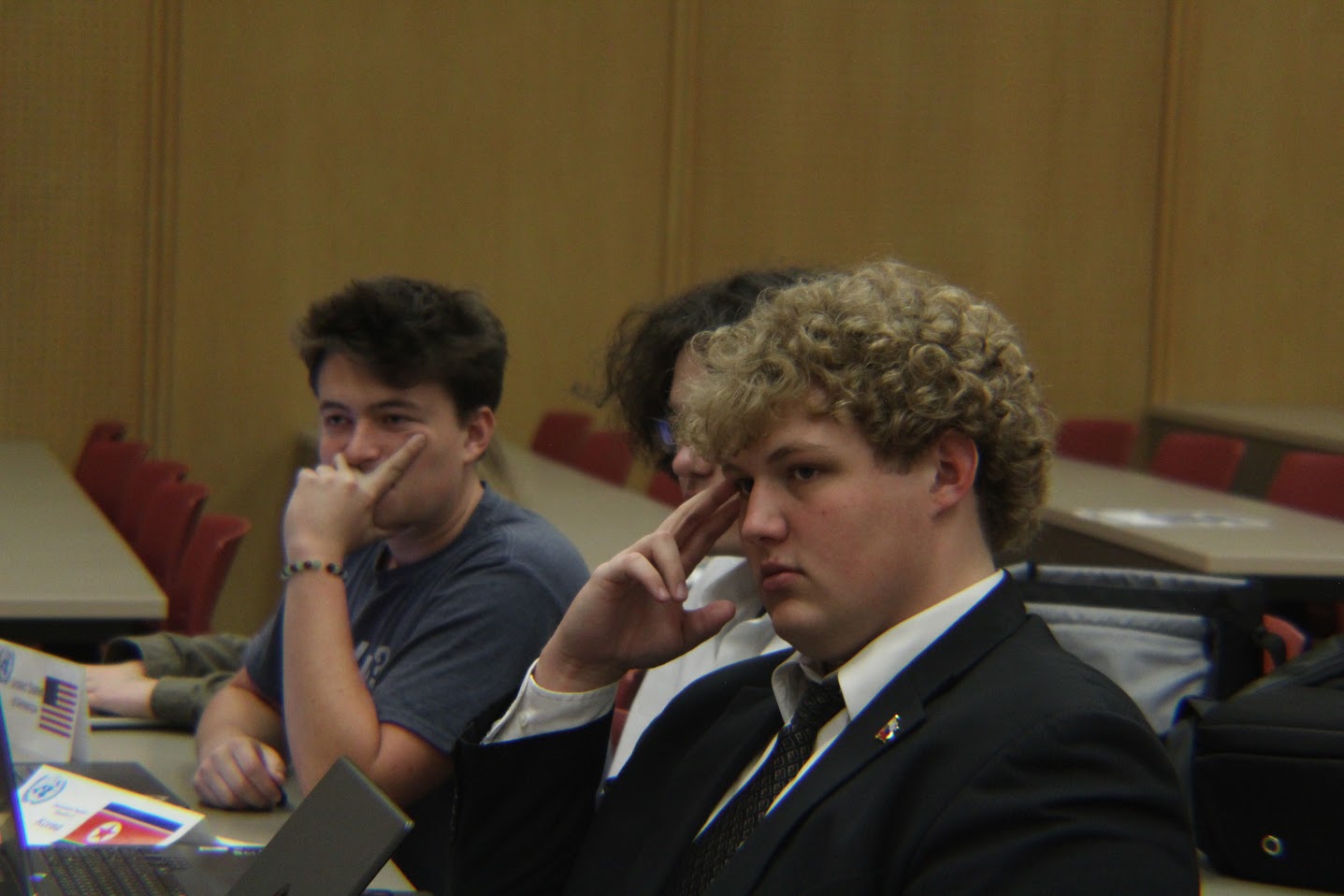
Model United Nations is a simulation of the UN. Students take on the roles of delegates, usually representing countries, and debate real global issues in mock committees. Along the way, you practice research, public speaking, negotiation and writing.
Every conference is a little different, but most follow the same basic path.
You're assigned a country (or another role) and a committee. Then you learn where your country stands on the topic, using the committee's background guide and UN sources.
Many conferences ask for a short paper explaining your country's stance and the solutions it supports, written before the conference begins.
In committee you give speeches, join moderated debates, and use unmoderated breaks to build alliances with other delegates.
Delegates work together to write draft resolutions, which are formal documents proposing solutions to the committee's topic.
Delegates vote on draft resolutions, and the ones that pass are adopted by the committee. The conference ends with a closing ceremony and awards for outstanding delegates.
You'll hear these a lot. Don't worry about memorizing them, because you'll pick them up quickly. Exact terms and rules vary a bit between conferences.
Joining the OU Model UN is easy! Here's how to get started:
Our meetings are always open to new members! Come to our meetings to learn more about the organization and meet other members.
Sign up on the OU Engage platform and join the GroupMe to stay updated on meetings and events.
Once you're familiar with the organization, you can choose events to attend and contribute to the discussion.
No. Our meetings are always open to new members, and plenty of people start with no experience at all. Come to a meeting to learn more about the organization and meet other members.
We meet every Monday from 7:00 PM to 8:00 PM in Farzaneh Hall, Room 148 on the OU campus.
Meetings are a chance to learn about the organization, meet other members, and participate in discussions. Throughout the year we also organize and host simulations, cultural events, and guest speakers.
Not right away. Many people start out listening and negotiating in small groups, then work up to giving speeches. Public speaking is one of the skills Model UN helps you build.
No. Model UN topics cover health, the environment, economics, technology and more, so students from any major can take part.
Meetings are held weekly for about an hour. Additionally, there may be extra time needed for preparing position papers and attending conferences.
There is no cost to join the organization. However, delegates may be responsible for covering their own food costs at conferences.
Sign up on the OU Engage platform and join our GroupMe to stay updated on meetings and events. You can find the GroupMe link on our social media page.
Still have a question? Send us a message.
Good places to start learning and researching. These links go to outside websites.
The United Nations' own guide to getting started with Model UN.
Look up any country's date of admission and official information.
The founding document of the United Nations.
Search UN resolutions, reports, and meeting records for research.
Preparation guides, position paper tips, and training tools for delegates.
Comprehensive resources for Model UN participants, including training materials and competition information.